

Beneath the bustling streets of Moscow, Russia’s capital, lies an intricate network of tunnels, bunkers, and underground facilities that has fascinated the public for decades. These secret subterranean systems, built during the Soviet era, stand as a testament to the tensions of the Cold War and the military preparedness of the Soviet leadership at the time. While many details about these underground complexes remain shrouded in secrecy, certain elements continue to emerge, offering a captivating glimpse into their purpose, structure, and significance.
Origins: The Development of Underground Bunkers in the Soviet Union
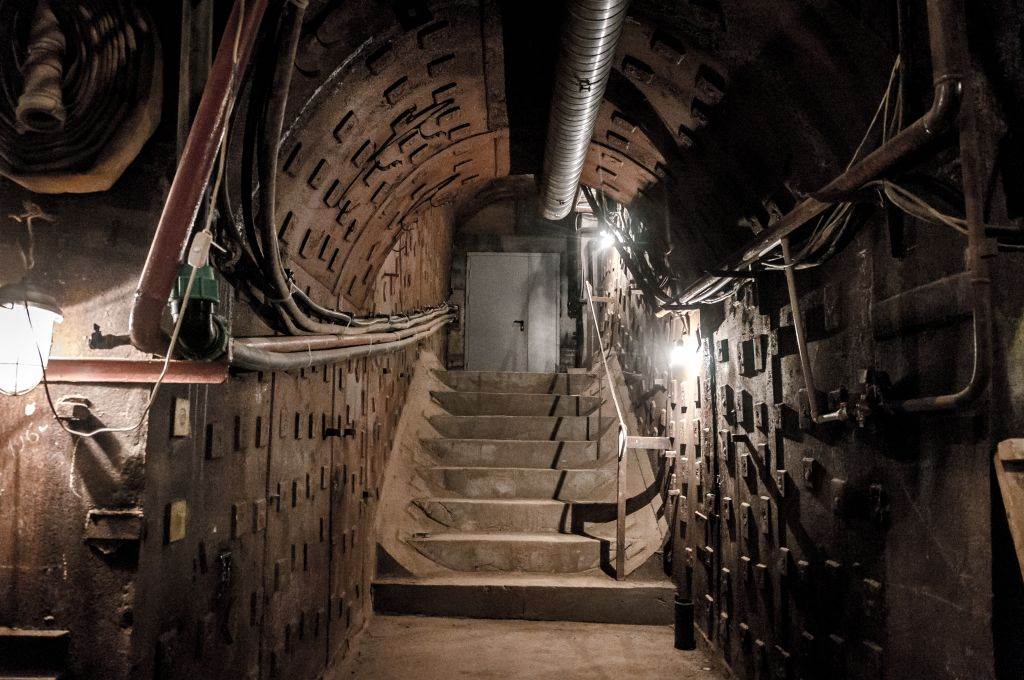
The construction of secret bunkers beneath Moscow began as early as the 1930s, but the most extensive expansion took place during the Cold War. A period marked by heightened tensions between the Soviet Union and the Western powers led by the United States.
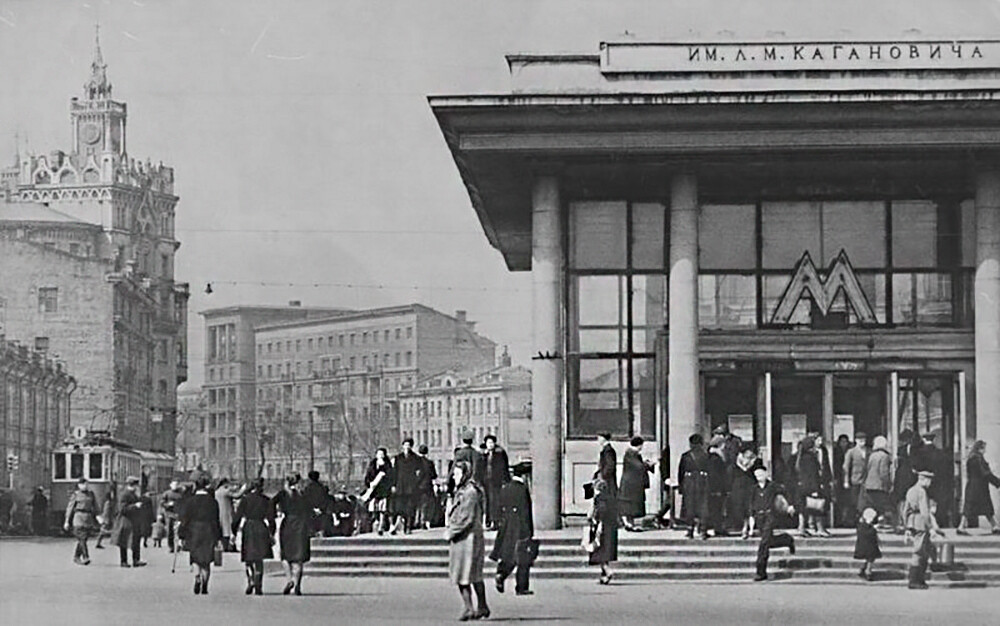
The fear of nuclear war, especially after the United States developed and used nuclear weapons during World War II, drove Soviet authorities to take decisive steps toward creating complex underground bunker systems. These facilities were designed to protect the country’s political and military elite in the event of a nuclear strike.
The primary purpose of these bunkers was to provide secure refuge for key state officials. Including then-leader Joseph Stalin, his successors, top military commanders, and heads of vital sectors. Built deep underground, the bunkers were engineered to withstand the force of a nuclear blast and equipped to sustain their occupants for weeks, or even months, in complete isolation.
Metro-2: The Greatest Secret of the Underground Network
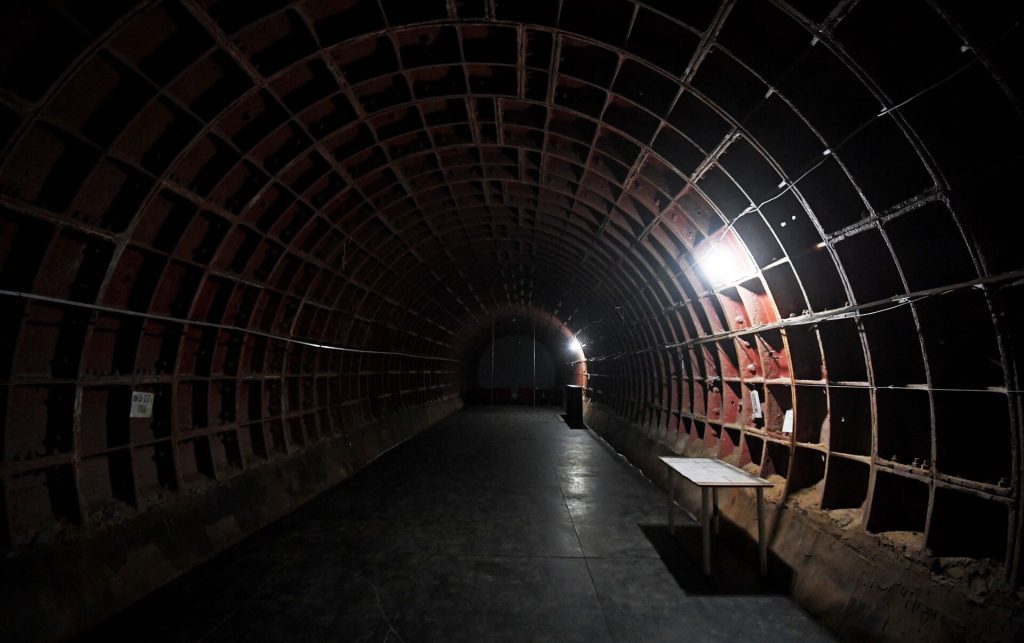
One of the most famous and most controversial parts of this subterranean world is Metro-2. A mysterious network of tunnels and railway lines said to exist beneath Moscow’s official metro system. According to unconfirmed reports, Metro-2 is directly connected to key locations in the city, including the Kremlin, government buildings, the Ministry of Defense, and secret military facilities outside Moscow.
Allegedly, Metro-2 consists of several lines buried much deeper than the public metro; at depths exceeding 200 meters. This network is not intended for public transport, but solely as an evacuation system for the ruling elite in the event of an attack. One of its supposed exits reportedly leads to a bunker in Ramenki, also known as Facility 42, a massive nuclear shelter built for the needs of Soviet leaders.
Many researchers and enthusiasts have speculated about the existence of Metro-2, but its presence has never been officially confirmed. Nevertheless, numerous sources, including former Soviet officials and declassified documents. Point to the existence of such a network, which remains deeply hidden from public view.
Bunker 42 – The “Taganka” Facility
One of the few bunkers whose existence has been confirmed and which is now open to the public is Bunker 42. Located beneath Taganka Hill in Moscow. This facility, also known as Object 42, was built in the 1950s at the height of the Cold War and served as a shelter for the highest-ranking military and political officials.
The bunker lies about 65 meters underground and was constructed to withstand a direct nuclear strike. Spanning several thousand square meters, it was fully equipped to operate under emergency conditions with living quarters, a command center, stockpiles of food and water, and its own ventilation and power systems.
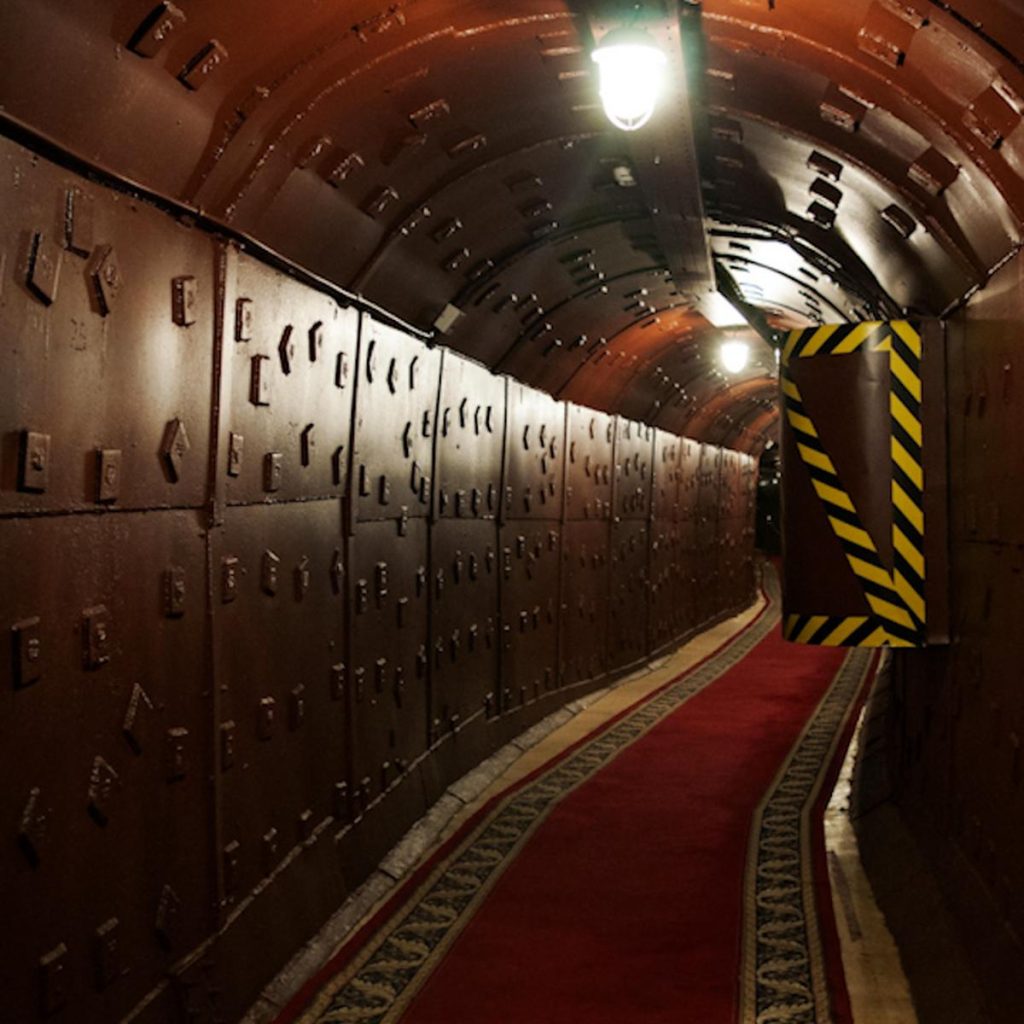
What makes this bunker particularly fascinating is the fact that it is fully connected to the Moscow Metro, allowing for the rapid evacuation of key personnel. Today, Bunker 42 has been transformed into a Cold War Museum. Where visitors can see what military facilities of the era looked like and learn more about the history of Soviet defense.
Bunkers Beneath the Kremlin
Many believe that the Kremlin, the very center of Russian power, has its own network of bunkers located deep beneath the complex. According to some sources, these bunkers are directly connected to secret tunnels leading to key state facilities. Such as the Metro-2 network and military headquarters.
These bunkers are believed to have been designed to provide maximum protection for military and political leaders in times of danger. While no official information exists about them, speculation about their purpose and capacity ranges from small shelters for several dozen people to vast underground cities capable of housing hundreds, or even thousands, of occupants.
The Ramenki Bunker
Another major facility within this underground network is the Ramenki bunker, also known as Object 42b. This enormous underground complex was built to shelter Russian leaders in the event of a nuclear attack. Located west of Moscow, it is said to have the capacity to house thousands of people.
Reports suggest that this bunker is connected to the Metro-2 network and was built in complete secrecy. Details about its exact size and equipment remain unknown, but it is believed to contain everything necessary to survive the long-term consequences of nuclear war. Including supplies of food, water, medicine, and fully independent life-support systems.
Purpose of the Secret Bunkers
The primary role of these secret bunkers and tunnels was to ensure the continuity of government in the event of nuclear war. As one of the world’s two superpowers during the Cold War, the Soviet Union considered such infrastructure vital to the survival of the state and its leadership.
The bunkers were designed to shelter not only military and political leaders but also essential technical and scientific personnel. Many of these facilities were connected to command centers, enabling the coordination of military operations even under the most extreme conditions. Some bunkers also contained specialized nuclear communication rooms and laboratories for analyzing potential radioactive contamination.
Legacy and Modern Significance
Although the Cold War ended more than three decades ago, this network of bunkers continues to fascinate researchers and enthusiasts around the world. Following the collapse of the Soviet Union, many of these facilities were abandoned or repurposed, while others remained operational and have been modernized to serve the needs of the present-day Russian government.
Their existence is a reminder of a time of global tension and the arms race and of the caution with which the Soviet Union approached its military strategy. While many bunkers remain hidden and inaccessible to the public, those that have been revealed offer a rare glimpse into a chapter of history long shrouded in secrecy.
Will they ever be used? That remains to be seen.
Thank you for reading,
Yours, Malamedija.rs


