How a socialist country managed to live better than many wealthier nations?
When former Yugoslavia is mentioned today, conversations quickly drift toward nostalgia, politics, or emotional memories. However, if emotions are set aside for a moment and Yugoslavia is examined through economic facts and historical context, one important question remains: how did a relatively small socialist country manage to function for decades as a serious economic power?
Not as a perfect state and not without problems, but as a country with stable industry, strong exports, high employment, and a standard of living that in many aspects surpassed the Eastern European average and in some segments even rivaled the West.
Yugoslavia after World War II: rising from the ashes
Yugoslavia emerged from World War II devastated. Industry was destroyed, infrastructure ruined, and the population impoverished. Its starting position was far worse than that of many Western European countries. Precisely for that reason, the economic rise that followed is all the more remarkable.
Under the leadership of Josip Broz Tito, the new state embarked on rapid reconstruction. The priorities were clear: industrialization, employment, and economic self-reliance. Massive investments were made in factories, power plants, roads, railways, and housing. There was no waiting for the “perfect moment.” Construction began immediately, often quickly and ambitiously.
Mistakes were made, without question. But one thing cannot be denied: the state had a clear direction of development.
A unique economic model: neither East nor West
One of the key reasons behind Yugoslavia’s economic success was its distinctive economic model. Yugoslavia did not follow the rigid Soviet-style planned economy, nor was it a classic capitalist system. It existed somewhere in between.
The foundation of this system was workers’ self-management. The idea was that factories formally belonged to society, while workers participated in decision-making regarding production, investment, and profit distribution. In practice, the system did not always function flawlessly, but it had one crucial advantage. Workers felt like participants in the system rather than expendable labor.
This sense of inclusion increased motivation, job stability, and social cohesion. People planned their lives in the long term, their jobs, homes, and families, because they felt a degree of security.
Industrial strength: factories that sustained the country
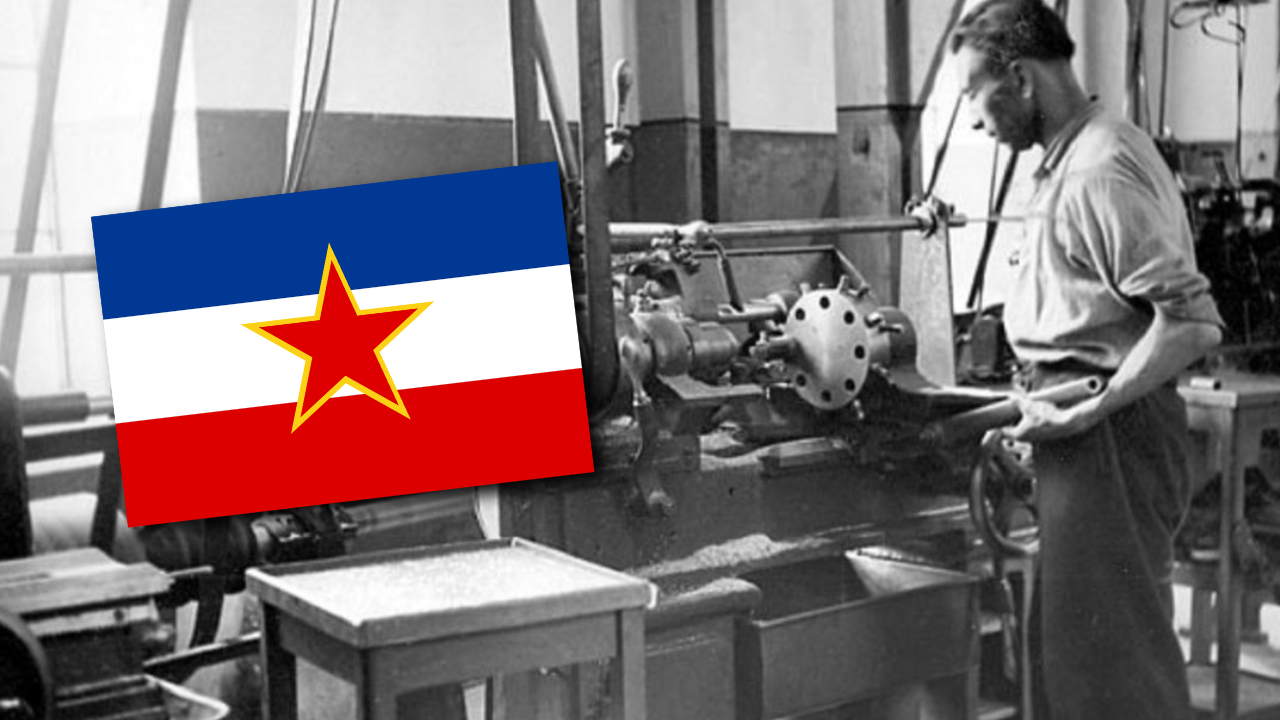
Yugoslavia was not a country that lived solely off agriculture or raw materials. On the contrary, industry was its backbone. Almost everything was produced domestically, from steel, aluminum, and ships to automobiles, machinery, household appliances, and military equipment.
Large industrial systems employed tens of thousands of workers and exported products worldwide. Yugoslav goods could be found in Africa, Asia, the Middle East, and Western Europe. It is particularly important to note that exports were diversified, which made the economy more resilient during periods of crisis.
The state was not merely a consumer. It was a producer. And that made a crucial difference.
Infrastructure as the foundation of development
One of the most visible indicators of Yugoslavia’s economic strength was its infrastructure. Highways, railways, bridges, ports, and airports were built systematically with long-term development in mind.
Cities expanded in an organized manner rather than chaotically. New residential areas, schools, healthcare centers, and cultural institutions were developed. Housing was accessible to broad segments of the population, often through favorable loans or apartments allocated through workplaces. This directly improved quality of life and social stability.
In other words, the economy was not just a statistical figure. It was something visible in everyday life.
Openness to the world: a passport that mattered
Unlike most socialist countries, Yugoslavia was open to the world. Citizens were free to travel, work abroad, and return home. Remittances sent by guest workers became a significant source of income, while also creating a bridge between the domestic economy and the West.
The Yugoslav passport was among the most respected in the world, allowing visa-free travel to many countries in both the East and the West. This openness enabled the flow of knowledge, technology, and ideas, further strengthening the economy.
Living standards: more than mere survival
Although Yugoslavia was not as wealthy as the most developed Western nations, living standards were stable and predictable. Most people had jobs, access to healthcare, education, and the ability to plan for the future. Life was not luxurious, but it was lived without constant fear of what tomorrow might bring.
This is perhaps the key reason why Yugoslavia is still remembered as an economically strong country. Not because everything was ideal, but because the majority of people experienced a sense of dignity in their everyday lives.
Foreign policy, non-alignment, debt, and internal weaknesses
If industry was the body of Yugoslavia’s economy, foreign policy was its shield. Yugoslavia did not build its strength solely from within but positioned itself carefully in a deeply divided world. This position provided economic opportunities that no other socialist country of the era enjoyed.
The Non-Aligned Movement and its economic impact
Yugoslavia’s leading role in the Non-Aligned Movement was a major source of its economic strength. While other countries were forced to choose between East and West, Yugoslavia managed to cooperate with both blocs and many nations beyond them.
This was not merely a diplomatic advantage but a concrete economic benefit. Yugoslav companies built roads, bridges, factories, and hydroelectric plants in Africa, Asia, and the Middle East. These projects generated foreign currency, employed domestic labor, and expanded markets for Yugoslav products.
In practice, Yugoslavia exported knowledge, labor, and industry at a time when such cooperation was not yet called globalization.
Exports as a pillar of stability
Unlike many socialist economies that remained inward-focused, Yugoslavia actively exported finished products such as ships, machinery, electrical equipment, weapons, and construction services.
Yugoslav companies competed in demanding international markets, which meant that quality and price mattered. An economy capable of exporting such a wide range of goods is inherently more resilient to crises.
Not every project succeeded, but the overall picture is clear. Yugoslavia was recognized as a serious economic partner.
Debt: a tool for development or a ticking time bomb?
One of the most controversial aspects of Yugoslavia’s economy was foreign borrowing. During the 1960s and 1970s, the country took loans from Western banks, often under favorable conditions.
Initially, this money was invested in industry, infrastructure, and modernization. At that stage, borrowing made sense. Problems emerged later when loans began to be used to maintain the system rather than further develop it. Instead of new value repaying debt, debt increasingly served to cover structural weaknesses.
This does not mean Yugoslavia collapsed because of debt alone, but it does indicate that borrowing became a symptom of deeper issues.
Internal weaknesses that accumulated over time
Despite its advantages, the economic model had serious weaknesses that gradually became more visible. The system encouraged employment but not always efficiency. Some enterprises survived despite lacking competitiveness, as social stability often took precedence over market logic.
Differences in development between republics also became increasingly significant, turning into political and economic issues. Solidarity was a cornerstone of the system, but without clear mechanisms of accountability, it gradually came to be perceived as a burden rather than an advantage.
In short, the system was stable, but not flexible enough to adapt to rapid change.
Tito’s death and the loss of balance
After the death of Josip Broz Tito, Yugoslavia lost its key stabilizing force. Tito was not only a political leader but also a figure who maintained balance between republics, ideology, and the economy.
Without a strong central authority, a system that functioned well during growth began to collapse under its own weight. Economic problems spilled into political ones, and political tensions into social unrest. Inflation, declining production, and rising unemployment were symptoms, not causes.
Did Yugoslavia have to collapse?
This question is still debated today. The answer is likely complex. Yugoslavia was not an economic illusion, but it was not invincible either. It was a system that worked exceptionally well in a specific historical moment, yet struggled to adapt to a rapidly changing world.
With more reforms, less politicization of the economy, and greater managerial responsibility, history might have taken a different path. What remains undeniable is that Yugoslavia was economically relevant for decades, with real industry, real exports, and a tangible standard of living.
A strength that was not a myth
Yugoslavia was not perfect, but it was not a myth. Its economic strength existed not only in memory but in factories, roads, ships, housing, and the everyday lives of ordinary people. Understanding that system today is not a matter of nostalgia, but a lesson in development, balance, and the limits of any economic model.
If you enjoyed this article, feel free to share it with your friends.
For more similar content, click here, and if you enjoy documentary programs, visit our YouTube channel MALAMEDIJA.
Thank you for reading,
your malamedija.rs