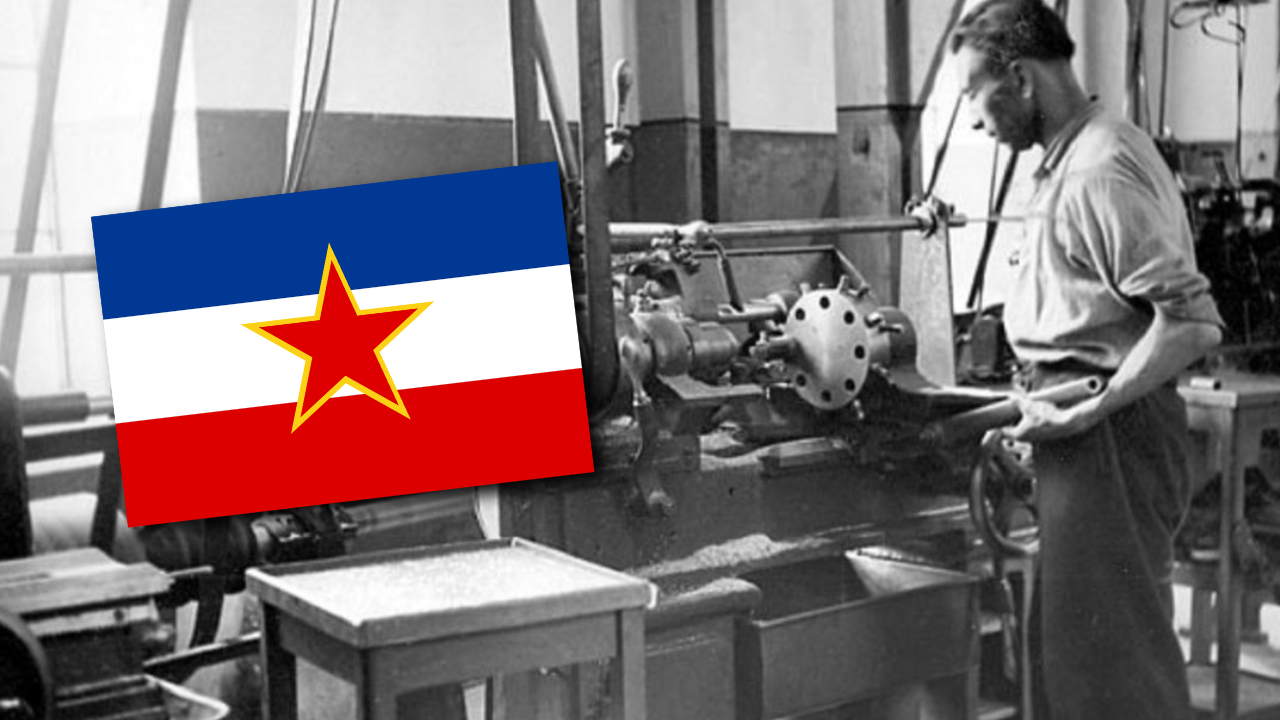
The Non-Aligned Movement represents one of the most important political and ideological movements in modern international relations. It emerged during the Cold War as an alternative to the bipolar world dominated by the United States and the Soviet Union. The Movement brought together states that sought to remain outside military blocs and to pursue an independent foreign policy.
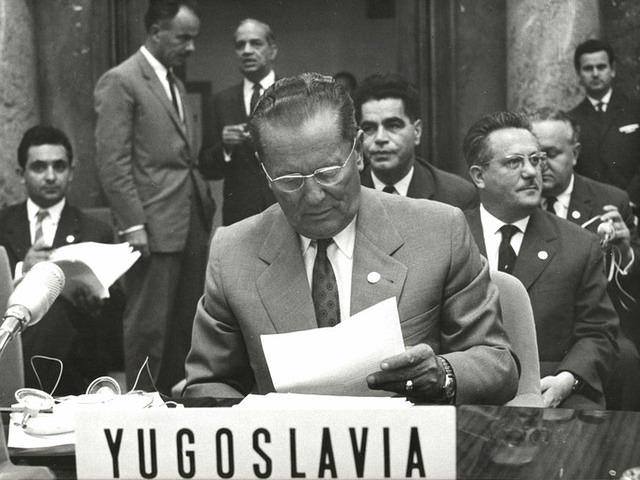
Yugoslavia, under the leadership of Josip Broz Tito, played a crucial role in its creation and development. The Non-Aligned Movement was, and remains, an important platform for developing countries to articulate their shared interests and to promote peace, sovereignty, and cooperation.
The Geopolitical Context of Its Emergence
After the end of the Second World War, the world was rapidly divided into two major blocs. The Western bloc was led by the United States and the NATO alliance, while the Eastern bloc was led by the Soviet Union and the Warsaw Pact. Many newly independent countries in Africa, Asia, and Latin America, which had only recently freed themselves from colonial rule, did not wish to align with either bloc. These countries were searching for a third path, the path of non-alignment.
Founders and Ideological Foundations
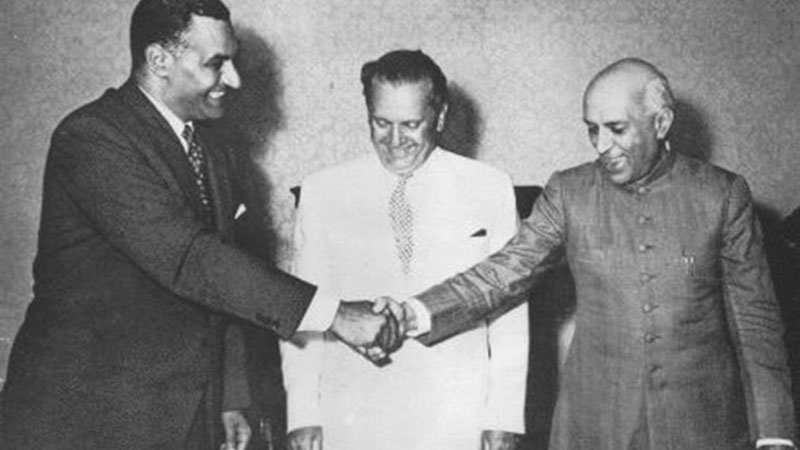
Three key figures are considered the founding fathers of the Non-Aligned Movement: Josip Broz Tito of Yugoslavia, Jawaharlal Nehru of India, and Gamal Abdel Nasser of Egypt.
As early as 1956, they met at the Brioni meeting, where they discussed the idea of forming an alliance of neutral states. This initiative soon gained global momentum.
The Non-Aligned Movement was formally established in 1961 at the First Conference of Non-Aligned Countries in Belgrade, attended by twenty-five founding states.
Core Principles of the Movement
At the Belgrade Conference, the fundamental principles were formulated, which continue to form the basis of the Movement today. These include respect for the sovereignty and territorial integrity of all states, non-interference in the internal affairs of other countries, refusal to participate in or support military alliances of the great powers, peaceful resolution of disputes, support for struggles against colonialism and imperialism, and the promotion of economic equality and cooperation among developing countries.
Development Through the Decades
During the 1960s, a period marked by enthusiasm and expansion, the Movement rapidly attracted new members, particularly countries emerging from colonial rule in Africa and Asia. In this decade, it became an important forum for opposition to colonialism, apartheid, and neocolonialism.
The 1970s represented the peak of the Movement’s influence. Its golden age was the Seventh Conference held in Havana in 1979, when the Movement counted one hundred and twenty member states and observers. During this period, it strongly advocated for a new international economic order, calling for a more equitable global system that would better serve developing countries. Yugoslavia, as one of the founders, played a key diplomatic role in moderating internal conflicts within the Movement and promoting the principles of non-alignment.
In the 1980s, the Movement began to face serious challenges. Following Tito’s death in 1980 and the gradual end of the Cold War, internal divisions among member states became more pronounced. Conflicting national interests, internal disputes such as those between Iraq and Iran or India and Pakistan, and the declining interest of major powers in non-aligned countries all weakened the Movement.
The 1990s brought a crisis of identity. The fall of the Berlin Wall and the collapse of the Soviet Union marked the end of the Cold War and the dissolution of the bipolar world order. As a result, the Non-Aligned Movement lost much of its strategic relevance, since there were no longer opposing blocs to remain unaligned from. At the same time, the disintegration of Yugoslavia, one of its founding members, further diminished the Movement’s symbolic significance.
The Movement in the Twenty-First Century
Although it has lost its Cold War importance, the Non-Aligned Movement continues to exist and brings together a large number of countries. Today, it comprises one hundred and twenty member states, making it the second largest international organization after the United Nations.
In the contemporary context, the Movement focuses primarily on promoting multilateralism and reforming the United Nations system, advocating for economic justice particularly in the context of globalization, addressing modern challenges such as climate change, digital inequality, and pandemics, and opposing new forms of hegemony and neocolonialism.
The Role of Serbia as the Successor to Yugoslavia
Serbia has retained observer status in the Movement, reflecting the role of the former Yugoslavia. Of particular importance was the Non-Aligned Movement Summit held in Belgrade in 2021, which marked the sixtieth anniversary of its founding. Delegations from more than one hundred countries attended the event, demonstrating that the Movement continues to hold relevance as a platform for global dialogue.
Although it no longer wields the political power it once did, the Non-Aligned Movement remains an important symbol of the struggle for sovereignty, equality, and international dialogue. In a world increasingly shaped by new forms of rivalry and inequality, the idea of non-alignment is once again gaining significance. Not as an escape from power, but as a demand for a fairer and more balanced international order.
If you enjoyed this article, please share it on social media and follow our YouTube channel “MALAMEDIJA,” where we regularly publish a wide range of documentary content.
Thank you for reading,
Your
malamedija.rs